
Signs You Have a Slab Leak in Your Tulsa Home (And Why It Can’t Wait)
Still Locally Owned
Most plumbing problems make themselves known pretty quickly — a dripping faucet, a running toilet, a drain that’s backing up. Slab leaks are different. They develop slowly, often out of sight, and by the time a homeowner notices something is wrong, the damage is already significant.3
For homeowners specifically, Tulsa slab leaks are a real and ongoing concern — and the way our region’s soil behaves plays a direct role in why. Here’s what you need to know, what to watch for, and why fast, professional response is essential.
Reach out to the professional plumbing team at Torch Plumbing, Heating, & Cooling today to learn more!
Call (918) 376-6664What Is a Slab Leak?
A slab leak is a leak that develops in the water lines running beneath the concrete foundation — or slab — of your home. Most homes in the Tulsa metro are built on slab foundations, which means the supply and drain lines that feed your home run directly through or under that concrete.
When one of those lines develops a crack, pinhole, or joint failure, water escapes into the surrounding soil or upward through the slab itself. Because these lines are buried under concrete, a slab leak isn’t something a homeowner can see or access directly — which is exactly what makes it so problematic when left undetected.
Why Tulsa Homes Are Especially Vulnerable
Oklahoma’s expansive clay soil is one of the primary reasons slab leaks are more common in this region than in many other parts of the country. Clay soil expands significantly when it absorbs moisture and contracts during dry periods. That constant swelling and shrinking creates ground movement — and when the ground moves, it puts stress on the pipes embedded in and beneath your foundation.
Tulsa’s climate amplifies this effect. Hot, dry summers followed by wet seasons mean the soil around and under your home is in an almost constant state of expansion and contraction. Over time, even well-installed pipes can develop micro-fractures or joint failures from the cumulative stress.
Older pipes are particularly vulnerable. Homes built with copper or galvanized steel lines — common in Tulsa neighborhoods built in the mid-to-late 20th century — face additional risks from corrosion as those materials age.
Warning Signs of a Slab Leak
Because the leak is hidden beneath your foundation, you have to read the signs it leaves elsewhere in your home. Here’s what to watch for:
Unexplained spike in your water bill. If your household usage hasn’t changed but your water bill has gone up noticeably, water is escaping somewhere. A slab leak can waste tens of thousands of gallons before it’s detected — and your water meter won’t know the difference between water you used and water that leaked into your foundation.
The sound of running water when nothing is on. If you hear what sounds like water moving through your pipes when every fixture in your home is off, that sound is going somewhere it shouldn’t.
Warm or hot spots on your floor. If a hot water line beneath your slab is leaking, it warms the concrete above it. Walking across a floor and noticing one area that’s noticeably warmer than the rest is a classic and telling sign.
Cracks in your flooring or walls. Slab leaks introduce moisture into your foundation. Over time, that moisture can cause the concrete to shift, which shows up as new or widening cracks in tile, hardwood flooring, drywall, or the foundation itself. If you’re seeing cracking that seems to be progressing, don’t assume it’s just the house settling.
Damp or wet flooring with no obvious source. Moisture wicking up through a slab can make floor surfaces feel damp, soft, or warped — particularly noticeable in hardwood floors, laminate, or carpet that’s developed unexplained wet spots.
Low water pressure throughout the house. A significant leak in your main supply line beneath the slab will reduce the water pressure available to your fixtures. If pressure has dropped noticeably across multiple areas of your home, it warrants investigation.
Mold, mildew, or musty odors. Persistent moisture beneath or within your flooring creates ideal conditions for mold growth. If you’re noticing musty smells that you can’t trace to an obvious source, moisture intrusion from a slab leak could be the cause.
Why Slab Leaks Can’t Wait
A slow slab leak might feel like something you can monitor and address later. In reality, the longer it goes unaddressed, the more expensive and disruptive the outcome:
- Foundation damage. Prolonged water exposure weakens the concrete and soil beneath your home, which can lead to settling, cracking, and structural instability over time.
- Mold and indoor air quality. Moisture trapped beneath floors and inside walls creates conditions for mold growth that can spread significantly before becoming visible.
- Escalating repair costs. A small pinhole leak addressed early is a far simpler repair than a pipe that’s been leaking for months into an already-compromised foundation.
- Water waste and utility costs. Even a modest slab leak can add hundreds of dollars to your water bills over the course of a few months.
Slab Leak Detection and Repair Is Strictly a Professional Job
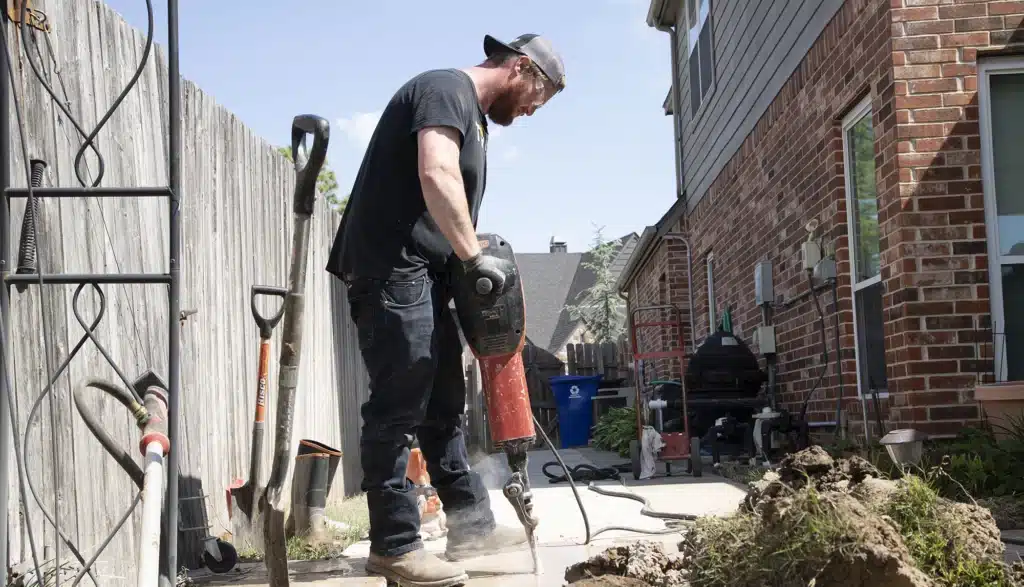
Locating a slab leak requires specialized equipment — acoustic listening devices, pressure testing, and in many cases, thermal imaging or electronic leak detection tools. These are not DIY methods, and guessing at a leak location can result in unnecessary cutting or jackhammering of your concrete slab in the wrong area.
Professional detection identifies the precise location of the leak before any repair work begins. From there, a licensed plumber will assess the best repair approach — whether that’s a direct access repair, pipe rerouting, or in some cases epoxy pipe lining — based on the condition of your existing plumbing and the nature of the leak.
Attempting to locate or access a slab leak without professional equipment and expertise causes more damage than it resolves. If you suspect a slab leak, the right next step is a call.
Don’t Ignore the Signs
Slab leaks are one of those problems that get significantly worse with time. If you’ve noticed any of the warning signs above — unexplained water bill increases, sounds of running water, warm spots on your floor, or new cracking — don’t wait to have it evaluated.
The sooner a slab leak is professionally detected and repaired, the smaller the repair, the lower the cost, and the less disruption to your home.
Torch Plumbing, Heating & Cooling — Tulsa’s Local Plumbing Experts
At Torch, we’re a locally owned, family-operated plumbing, heating, and cooling company serving Owasso, Tulsa, and the surrounding metro area. Our licensed plumbers use professional leak detection equipment to accurately locate slab leaks and give you a clear, honest repair plan — no guesswork, no unnecessary work.
If you suspect a slab leak in your Tulsa home, don’t wait for the problem to get worse.
Call (918) 376-6664OWASSO-BASED & FAMILY-OWNED
SERVING THE TULSA METRO AREA
 All Service Areas
