
Water Heaters Collinsville
STILL LOCALLY OWNED

STILL LOCALLY OWNED
Unlike others who may prioritize profits over people, our focus is on serving the community that has supported us and helped us grow.
KNOW YOUR OPTIONS
We will answer any questions you may have and provide you with complete information so you can make the best decision for you and your home.
COMPETITIVE PRICING
Don’t break the bank after an emergency. Our competitive pricing system gives you the peace of mind knowing we have the best rates in town.
Water Heaters in Collinsville: Repair, Replacement, and Maintenance
A dependable water heater is essential for everyday comfort, from taking showers and washing dishes to running laundry and cleaning around the house. When hot water becomes inconsistent or your system starts making unusual noises, it may be time to schedule an inspection. For homeowners researching water heaters in Collinsville, understanding common warning signs and available options can help prevent unexpected breakdowns and unnecessary expenses.
Water heaters can provide years of reliable service, but their performance depends on proper installation, routine maintenance, and the condition of their components. Knowing when to repair an existing unit, when to replace it, and which system best suits your household can help you make a more informed decision.
Signs Your Water Heater Needs Professional Attention
Water heaters often show signs of trouble before they stop working completely. Paying attention to these changes can help you address developing problems before they disrupt your routine.
One common warning sign is inconsistent water temperature. If your shower turns cold unexpectedly or hot water takes longer to reach the faucet, a heating element, thermostat, burner, or other component may need attention. The cause can vary depending on whether your system uses electricity or natural gas.
Unusual noises are another reason to investigate. Rumbling, popping, or banging sounds may develop when sediment accumulates inside a storage tank. Mineral deposits can interfere with heat transfer and contribute to reduced efficiency. Depending on the unit’s age and condition, professional maintenance may help resolve the issue.
Water around the base of the heater should never be ignored. A leaking connection or drain valve may be repairable, but water escaping through a corroded tank can indicate that replacement is necessary. Rust-colored hot water, visible corrosion, and recurring equipment problems are additional signs that the system needs an inspection.
If you notice any of these symptoms, identifying the source early can help you avoid more extensive repairs and potential water damage.
Repair or Replace Your Water Heater?
A water heater problem does not always require a complete replacement. A relatively new system with a faulty thermostat, heating element, or replaceable valve may be repaired at a reasonable cost. Correcting the specific problem can restore performance without requiring a new unit.
However, the decision becomes more complicated when an older heater develops repeated issues. Many conventional tank-style water heaters last approximately eight to twelve years, although actual service life depends on installation, water quality, maintenance, and usage.
If the tank itself has developed a corrosion-related hole, replacement is generally the more dependable option. A damaged storage tank typically cannot be repaired in a way that restores its long-term integrity.
Before choosing a solution, compare the estimated repair cost with the price of a replacement, including installation and any necessary plumbing modifications. Consider the heater’s remaining service life, energy efficiency, and history of previous repairs.
Homeowners seeking professional guidance can explore water heater repair in Tulsa to learn about available services and determine which options may suit their equipment and household needs.
Call (918) 209-3820
4.9 STARS | 1,850+ GOOGLE REVIEWS


Ready for 5-star service? Contact Torch today for professional & quality service!
Choosing the Right Water Heater for Your Household
The best water heater depends on your home’s hot water demands, available installation space, energy source, and budget. Comparing different systems can help you choose equipment that provides reliable performance without unnecessary operating costs.
Traditional Tank Water Heaters
Traditional tank water heaters store heated water for use throughout the home. They are a practical option for many households because they provide a ready supply of hot water and are available in a range of capacities.
When selecting a tank model, consider how many people live in your home and how often showers, dishwashers, and washing machines operate simultaneously. A system with insufficient capacity may run out of hot water during busy periods, while an oversized unit may cost more to purchase and operate than necessary.
Tankless Water Heaters
Tankless water heaters heat water as it flows through the system instead of maintaining a stored supply. These models can save space and reduce standby heat loss, depending on usage and installation conditions.
However, the unit must be sized correctly to meet simultaneous hot water demands. Installation may also require modifications to gas lines, electrical service, venting, or plumbing. A professional assessment can help determine whether a tankless system is appropriate for your home.
Energy Efficiency and Long-Term Value
When replacing an older water heater, consider more than the purchase price. A newer, efficient model may reduce energy consumption, but actual savings depend on equipment specifications, household habits, utility rates, and installation quality.
Compare initial costs, maintenance requirements, expected service life, and operating expenses. Choosing the right capacity and system type can help balance comfort, efficiency, and long-term value.
Why Routine Water Heater Maintenance Matters
Regular maintenance helps identify developing problems and supports dependable water heater performance. Although specific requirements vary by model, periodic inspections can help homeowners understand the condition of important components.
For tank-style systems, sediment may accumulate at the bottom of the tank over time. Depending on the manufacturer’s instructions and the condition of the equipment, periodic flushing may help reduce buildup and maintain efficient heat transfer.
The anode rod also deserves attention when applicable. This component helps protect the tank from corrosion and may need replacement as it deteriorates. Checking it at appropriate intervals can help preserve the tank’s protective system.
Professional inspections can also identify worn connections, leaking valves, corrosion, and other concerns. Gas water heaters require appropriate attention to burner operation and venting, while electric models may need checks of their heating elements and electrical components.
Always follow the manufacturer’s maintenance guidance. If the unit is heavily corroded or leaking, consult a qualified professional before attempting maintenance.
Call (918) 209-3820Prevent Water Damage From a Leaking Heater
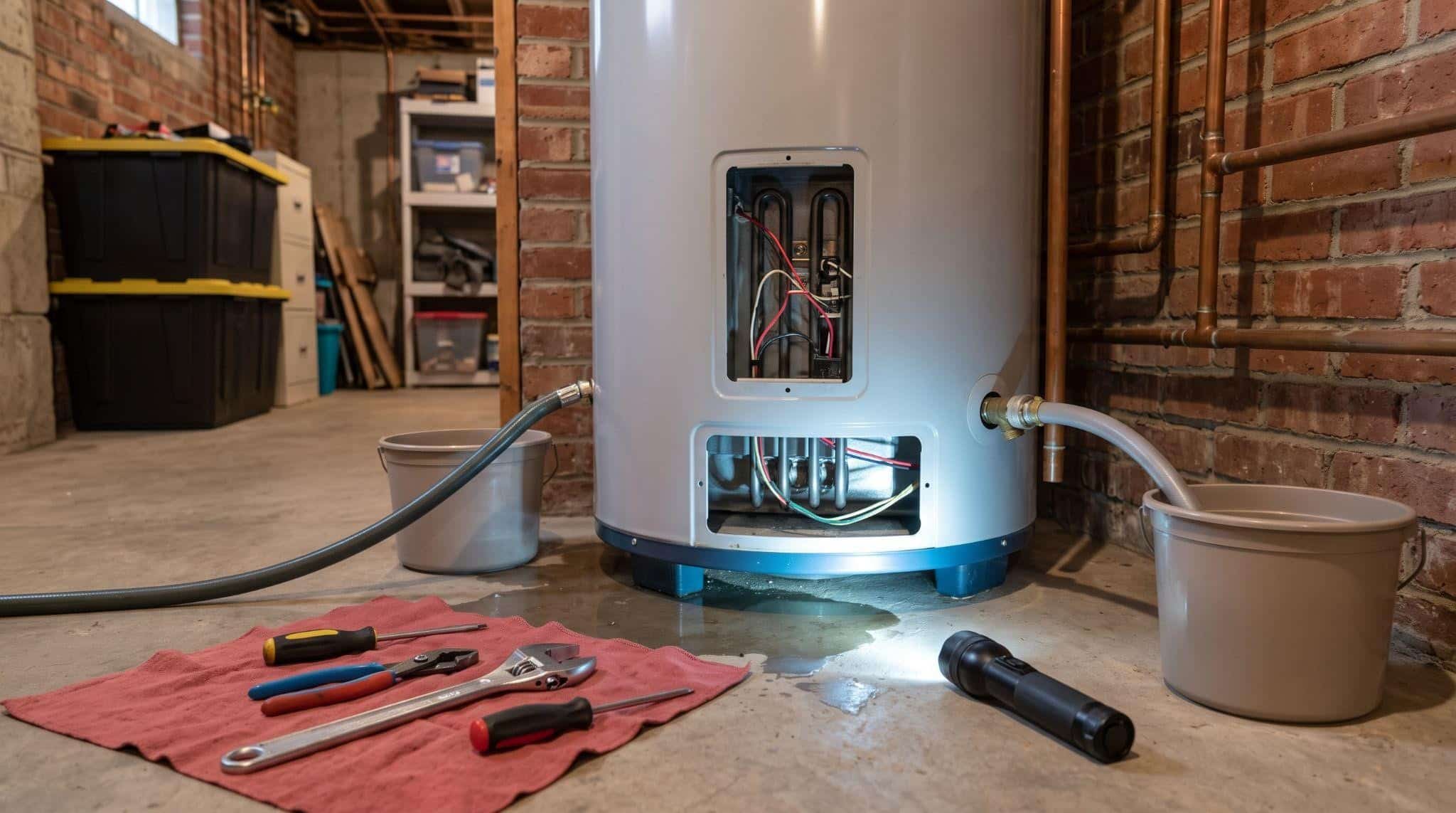
A water heater leak can damage flooring, drywall, insulation, cabinets, and stored belongings. The potential impact depends partly on where the unit is installed. A heater in a finished basement, interior closet, or upper-level utility space may create substantial damage if water spreads unnoticed.
Watch for puddles, damp walls, rust stains, warped flooring, and unexplained moisture around the unit. Water collecting beneath the heater does not always mean the tank has failed, so identifying the source is important.
If a significant leak develops, shut off the water supply when it is safe to do so. For an electric unit, switch off its breaker if you can do so safely. If you smell gas, leave the area and contact the appropriate emergency service. Never disable the temperature and pressure relief valve or continue operating equipment with a suspected tank failure.
Proper installation also matters when replacing a water heater. Drainage, clearances, ventilation, pressure relief provisions, and applicable building codes should be considered to help protect the home and ensure safe operation.
Maintain Reliable Hot Water in Collinsville
Choosing the right water heater starts with understanding your household’s needs and recognizing when existing equipment requires attention. A repair may be sufficient for a minor component problem, while a corroded tank or an aging system with recurring failures may be better replaced.
For homeowners in Collinsville and the surrounding Tulsa area, Torch Plumbing, Heating & Cooling can help evaluate water heater concerns and explore appropriate repair or replacement options. With professional guidance and regular maintenance, you can make informed decisions that support dependable hot water, energy efficiency, and long-term comfort.
Tulsa-BASED & FAMILY-OWNED
SERVING THE TULSA METRO AREA
 All Service Areas
